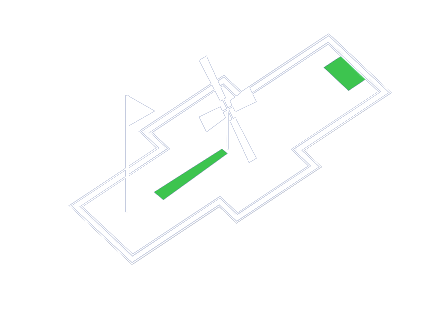

For a complete list of the 18 holes, please see below:
Hole 1: DOWN THE DRAIN
Kim Hollerman (Brooklyn-Based Artist)
Litter and debris accumulate on city streets and get carried into storm drains by rainwater. This hole focuses on litter-free streets.

Hole 2: WHALE FALL FEAST
Dear Climate (Art Collective) and Black Globe (Architect)
Ocean pollution affects the naturally occurring ecosystem that is created when whales pass away. Their bodies nourish thousands of organisms. Ocean pollution disrupts this process impacting the many species that inhabit the ocean.
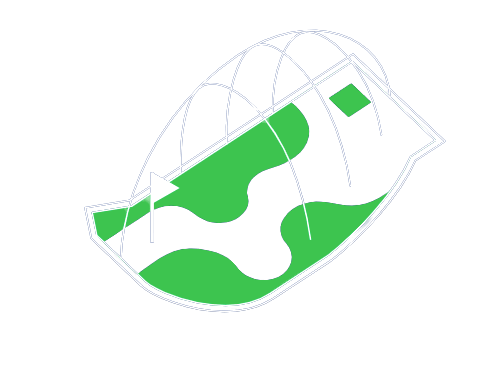
Hole 3: CAPITALOCENE’S MELT
Juanli Carrion (Brooklyn-Based Artist)
Due to the warming of the planet, polar bears have lost an alarming portion of their habitats. With the change of their habitats, they must travel further to hunt for food.

Hole 4: HIGHER GROUND
Mike Tribe (Brooklyn-Based Artist)
Manhattan island’s shifting shoreline creates a backdrop for the impacts of sea-level rise by 2100.
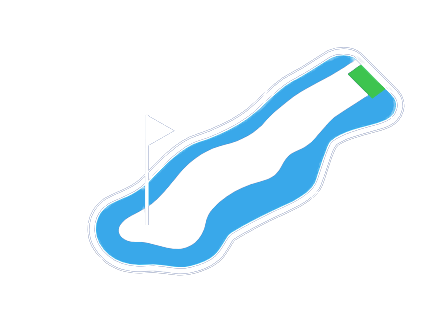
Hole 5: STAYING AFLOAT
YMCA of Greater New York, Greenpoint (Nonprofit Organization)
With rising sea levels, cities will have to create adaptation solutions such as coastal management, elevated public transportation, and renewable energy.
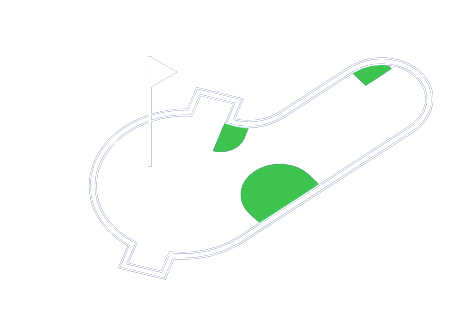
Hole 6: CHOICES
OBJ (Design Collective)
Global displacement caused by extreme weather events alters habitable environments. The Paris Climate Agreement helps protect communities and reverse the climate change refugee crisis.
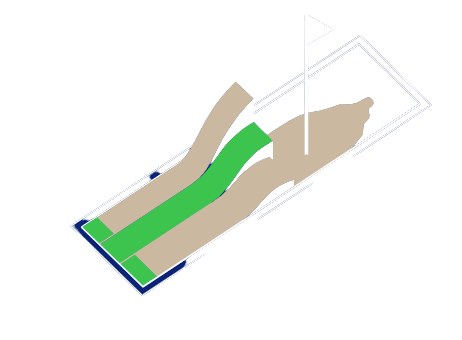
Hole 7: TWO PATHS
Lower East Side Girls Club
Today’s environmental activists are pushing for a regenerative future that puts nature first, protects biodiversity, creates equal opportunities, and ends the need for fossil fuels.

Hole 8: SURGE GARDEN
Williamsburg High School for Architecture & Design (Public High School)
New York City has 520 miles of waterfront. Implementing strategies for coastal strength such as coastal plantings, riprap shorelines, and living breakwaters can help protect our shoreline from sea level rise and storm surges.

Hole 9: ICE MELT
Blane De St Croix (Brooklyn-Based Artist), Paul Amenta (Artist), and Ted Loft (Architect)
One of the most apparent examples of climate change is the consistent retreat of glaciers on all continents. The decline in ice and snow affects oceanic and atmospheric temperatures and weather patterns around the globe.
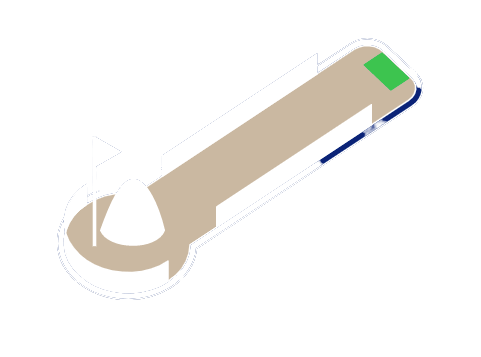
Hole 10: FOREST FIRES
Blane De St Croix (Brooklyn-Based Artist), Paul Amenta (Artist), and Ted Loft (Architect)
Although occasional wildfires play a role in the life cycle of forests, dry conditions cause by climate change have significantly increased how often they occur, leading to loss of life, poor air quality, and the reduction of crops.
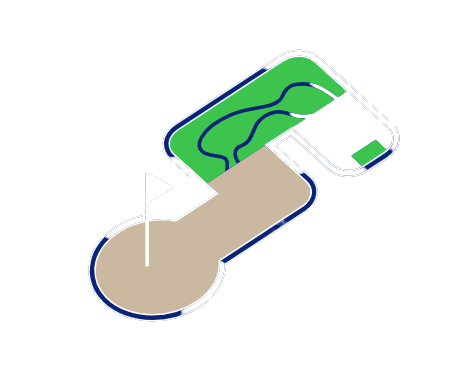
Hole 11: HUMANS ARE THE KEY
Mel Chin (Artist)
Although pollinators, insects, and birds support wildfires, indigenous plants nurture underground ecosystems. They encourage symbiotic relationships amidst organisms to keep soil healthy and protected against erosion.

Hole 12: ENERGY EFFICIENT BUILDINGS.
NYC Climate Action Alliance (Climate-Focused Nonprofit)
Although 70% of NYC greenhouse gasses come from NYC’s pre-war buildings, building owners can reduce emissions, buy updating lighting, plug-load, and HVAC strategies.

Hole 13: COMPOST FORE NYC
DSNY Sanitation Foundation (Nonprofit Organization)
Organic matter makes up a third of New York City’s waste stream. Landfills emit methane gas when organics deteriorate inside them. By turning scrap into compost, we reduce emissions and give the nutrients back to the earth’s soil.

Hole 14: METHANE MADNESS
Institue for Aesthlectice & Tom Russotti (Brooklyn-Based Artist)
As cows digest, microbes in their stomachs break it down and produce 220 lbs of methane every year. However, sustainable farming practices address agricultural methane production as the demand for beef continues to rise in an effort to prevent these emissions.

Hole 15: THE BIG OYSTER
Billion Oyster Project (Citizen Science Project) and Chris Edmonds & Nat Quinn (Designers)
Due to overfishing, pollution, and habitat loss, oysters have almost completely disappeared from New York harbor. Restoring oysters is critical to healthy waterways, because of the toxin filtering they provide when filtering water through their gills.

Hole 16: FORE-WARD THINKING
WSP (Engineering & Design Firm)
With its 472 emission-free stations, NYC’s subway systems are a climate-conscious solution to reducing emissions from excessive public transportation.

Hole 17: GREEN IT, NYC!
Julie Ember (Public Space Designer) and Katie Shima (Artist and Architect)
Trees, parks, and wetlands make up 40% of NYC’s land cover and make our city stronger. They isolate carbon, lessen the urban heat island effect, provide habitats to wildlife, and reconnects New York with nature.

Hole 18: SHOOT THE BREEZE: BACK TO THE FUTURE WITH WIND ENERGY
Alison Simko (Journalist) and Kate Mulhauser (Designer)
400 years ago, settlers of New Amsterdam used windmills to supply power. NY state is now developing offshore wind farms, to meet renewable power goals.